Green Steel & Decarburization
In a professional context it often happens that private or corporate clients corder a publication to be made and presented with the actual content still not being ready. Think of a news blog that's filled with content hourly on the day of going live.
Global Resorts Network Putting Timeshares To Shame
Brent Conrad talks with everyone from, frequent travelers to the busy family that can only get away for vacation every couple of years.
Steel Has Always Been Hard to Make. Now It Has to Be Clean.
The steel industry accounts for roughly eight percent of global CO₂ emissions. That statistic appears in every sustainability report and boardroom deck in the sector - but what it doesn't tell you is how difficult it actually is to reduce it without stopping production, losing yield, or rebuilding a plant from the ground up. Decarbonization in steel is not a policy choice. It's a detailed engineering project, and it starts with understanding exactly where the carbon comes from in your specific process.
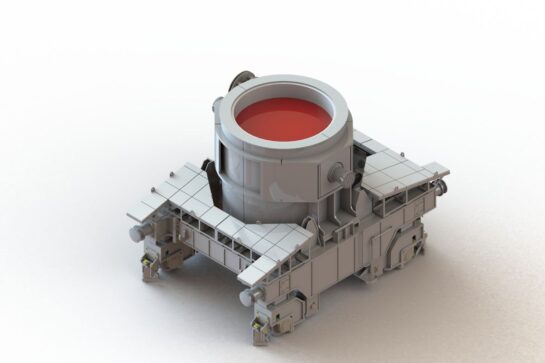
For most steel producers, the first credible lever is electrification—replacing fossil-fuel combustion in ladle furnaces, preheating stations, and auxiliary thermal systems with high-efficiency electrical alternatives. The second is Waste Heat Recovery (WHR): capturing the substantial thermal energy that exits through furnace roofs and fume extraction systems and redirecting it to pre-heat scrap, dry raw materials, or generate process steam. Neither of these is new technology. What changes with each plant is the engineering required to implement them within the physical reality of a running meltshop.
Alvand Technic approaches decarbonization projects the same way we approach any brownfield intervention: we start with a precise 3D scan of the existing plant to understand exactly what space, what temperatures, and what process constraints we're working within. From there, we model the energy flows using our in-house simulation tools—Discrete Event Simulation for logistical impact, CFD for thermal validation—before any capital decision is made. A green project that doesn't survive contact with your operational reality isn't a green project. It's a cost.
In Alvand Technic, We've designed WHR systems integrated into rotary furnace lines, electrification packages for ladle preheating stations, and Smart Combustion upgrades that reduce gas consumption by adjusting burner curves in real time based on scrap chemistry and exhaust gas composition. In every case, the starting point was the same: a rigorous engineering audit of the existing system, not a sales pitch built on average industry benchmarks.
Green Steel is where our Vision 2028 is most concrete. We are not positioning ourselves as sustainability consultants. We are engineering firms that can design, validate, fabricate, and commission the systems that actually reduce your Scope 1 emissions—on time, within your shutdown windows, and with a performance guarantee attached.